
How to Tell Whether a Math Toy with Numbers and Symbols Fits Your Child’s Current Stage

The trap is not choosing too little. It is choosing a format that looks clear to you but still reads as noise to your child. That mistake does more than waste a purchase. It pushes the adult back into constant translation, and the activity starts feeling heavier than it looked.
Experienced screening starts earlier than age labels. It starts with symbol recognition, visible review, and whether the rule can survive a short guided retry. A good fit lowers decision load during use. A bad fit keeps asking for rescue.
On this page
Quick Win
A math toy with numbers and symbols can look like an easy win because the task seems concrete and the object looks compact. The hidden problem is that compact does not mean self-explaining, and when the symbols still feel empty, the adult ends up carrying the whole task load anyway.
The better filter is simpler than most listings make it sound: can the child notice the marks, can the arranged result stay visible long enough for shared review, and can the activity work without a built-in physical lock on every move. The lazy shortcut is trusting a general age label and assuming the rest will sort itself out during use.
Fast fit screen
- Check whether printed digits or operation marks already carry meaning for the child instead of reading as surface decoration.
- Check whether you want the result to stay visible so you can review it together without guessing what the child meant.
- Check whether you are comfortable with rule checking on the displayed output rather than expecting a fixed physical answer from each move.
A quick pass here saves time later because this format fails early when symbol meaning is not there yet.
What the Child Needs Before This Format Starts Helping
Readiness usually breaks earlier than buyers expect. A child may enjoy counting, enjoy handling objects, and still stall the moment a rule depends on printed symbols rather than familiar quantity play. That mismatch creates confusion first and disappointment right after, because the activity looks close enough to success to keep tempting the adult to over-explain it.
This is why experienced screening starts with number sense and symbol awareness instead of shopping language. The shortcut that misfires is treating general interest in numbers as proof that a rule-based object will already feel usable. It is a weaker signal than people want it to be.
How to Judge Rule Load Before You Buy

Rule load is where a rule-based math toy starts looking cheaper than it really is. On the surface, the object is small, the task seems repeatable, and the setup looks light. The hidden cost lands upstream: if every try begins with symbol translation and rule rescue, the routine starts tired before the practice even begins, and the adult becomes the operating system instead of the guide.
The more reliable screen is whether the child can carry both symbol meaning and sequence logic at the same time, even in a simple prompt. Visible review helps, but it does not erase the rule itself. The false shortcut is assuming that a compact format is automatically low-friction when the actual drag comes from explanation load, not storage or handling.
What to Watch in the First Few Tries

This stage is where vague optimism usually collapses into something easier to read. When the child keeps moving the parts without connecting the display to a rule, the adult often interprets persistence as progress. It usually is not. It is drift, and drift makes the session look active while the actual fit stays unresolved.
The sharper read is whether the object starts producing meaningful pauses, shared checking, and purposeful retries. Those are the signs that the format is doing real work. The shortcut that wastes time is waiting for improvement to appear from repetition alone when the structure still does not make sense to the learner.
Why a Visible Rotating Format Can Work for the Right Stage

When the stage is right, the visible equation review is not just a cosmetic feature. It lowers restart friction because the object keeps the work in view. That matters more than it sounds. Activities get abandoned when every session begins with rebuilding context from scratch, patience thins out, and even a promising format becomes something people stop taking out.
The experienced read is that a visible rotating format helps because it holds the child and adult inside the same logic loop: arrange, inspect, adjust, retry. The false shortcut is treating the object as if the compact form alone carries the value. It does not. The value comes from lowering review friction, not from looking tidy on a table.
Where the format helps
- The child can build a visible relation and keep it available for joint review.
- The adult can point to the displayed arrangement instead of reconstructing the child’s intention from memory.
- The compact math manipulative format supports short guided practice without needing a large setup footprint.
The value is strongest when symbol recognition already has a workable base.
What This Format Does Not Replace
A lot of buyer regret comes from asking a narrow tool to solve a wider problem. Once that happens, every limitation feels like failure, even when the object is doing exactly what its format allows. That is how a useful practice tool gets blamed for not turning into a teaching system, and the decision starts to sour for the wrong reason.
This is where fixed-answer validation matters as a boundary, not a hidden feature. If you need the object itself to enforce the result at each move, visible review will not feel equivalent. The shortcut that misfires is assuming all structured formats deliver the same type of confirmation just because they look orderly.
Boundary checks
- Stop treating the object as a full teaching system when what it really supports is compact guided practice.
- Stop expecting fixed-answer validation if the task still depends on reading the displayed relation correctly.
- Stop forcing a fit when the household needs broader instruction rather than a focused rule-practice tool.
Boundary clarity prevents the wrong kind of disappointment.
Before You Choose a Variant

Even a good format becomes a weak purchase if the listing leaves the important parts vague. This is where buyers often talk themselves into flexibility and assume any close-looking version will do. It rarely saves effort. It just shifts uncertainty into the moment the item arrives, when correction is slower and more annoying.
The experienced move is to verify the parts that control usability before you commit: what symbols are shown, whether listings match each other, and whether the version you are seeing actually fits the stage you screened for. The shortcut that fails here is treating visual similarity as proof of functional sameness.
Listing checks that matter
- Confirm the printed symbol set before deciding, because the fit depends on what the chosen version actually shows.
- Confirm the variant symbol layout and bundle details before assuming different listings work the same way.
- Confirm any material or documentation concerns separately if those checks matter in your buying process.
Unclear listing details can undo an otherwise sound fit decision.
Wrap-up checks
Choose this format when symbol recognition is already present, visible review will reduce confusion, and the listing confirms the version clearly enough to trust the fit.
- You know whether the child reads the printed marks as meaningful or empty.
- You know whether visible review is enough for your household or whether you need stronger built-in correction.
- You know whether the specific listing confirms the symbol set and variant details well enough to proceed.
Search again when the child still needs full symbol translation, when you realize you need broader instruction than this format offers, or when the listing leaves key variant details unresolved.
Use the listing screen as the final checkpoint, then compare only the versions that still match the stage and review style you actually need.
FAQ
The stronger signal is whether printed digits already mean something during guided use rather than simply looking familiar.
A numbers-and-symbols format adds rule interpretation, so general enthusiasm is a weaker fit signal than people hope.
Repeated random handling, heavy reliance on adult translation, and confusion that does not ease during guided retries are stronger warning signs than a broad age label.
When the structure stays dependent on rescue, the format is asking for more interpretation than the child can currently carry.
Those signals reveal fit faster than a label because they show whether the task structure is actually landing.
If the object produces activity without understanding, the household is seeing motion rather than usable readiness.
The value of a visible layout is that it keeps the result available for checking together.
That still depends on symbol understanding and does not turn the object into a fixed-answer system.
Its strength is compact guided review around visible rule work, not broad coverage across every teaching need.
That boundary matters because many buying mistakes start when a narrow tool is expected to solve a wider problem.
The usefulness of the toy depends on what the chosen version actually shows, not on what nearby listings imply.
Variant clarity matters because visual similarity can hide meaningful differences in what the child will actually use.
Recommended picks
Quick matches for this article

For visible review, Rotating Arithmetic Numbers Cube Toy supports short practice loops.
Rotating Arithmetic Numbers Cube Toy for Kids

Wooden Finger Counting Board for guided practice — number blocks and math cards.
Wooden Finger Counting Board | Montessori Math Toy
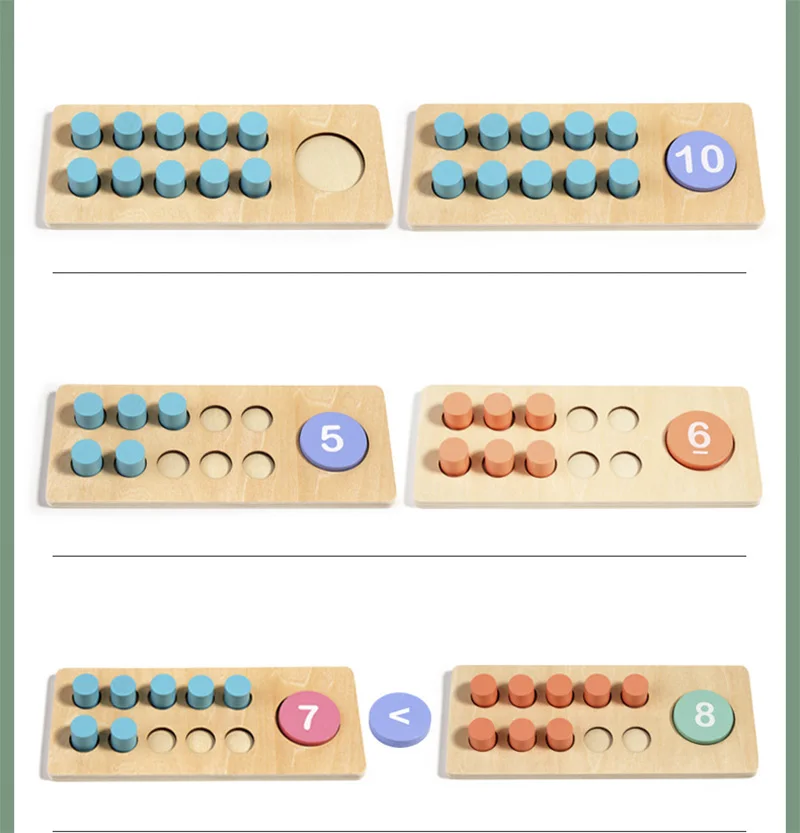
For addition practice, Wooden ten-frame math set aligns with cards and tokens.
Wooden ten-frame math set for addition and subtraction (number board + cards + tokens)

For early counting, Magnetic Color & Number Maze adds clear parent guidance.
Magnetic Color & Number Maze | Montessori Fine Motor Toy

Montessori Lock & Key Number Toy for guided practice — early counting.
Montessori Lock & Key Number Toy for 3–6 Year Olds


