


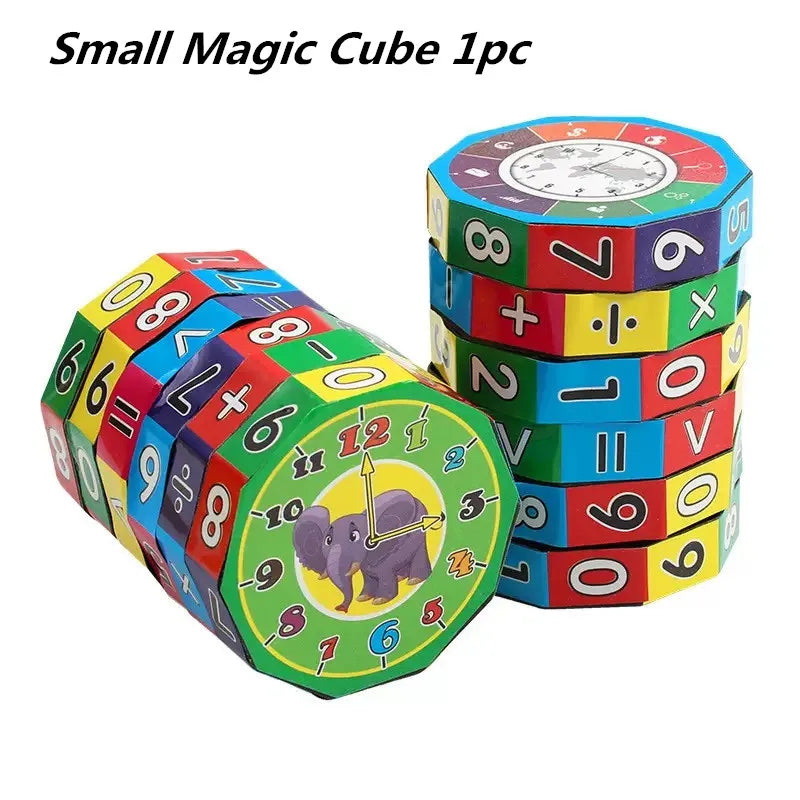
A math cylinder puzzle is a compact handheld tabletop activity that changes number and operator layouts by rotating six stacked rings. This format fits when you want one non-electric puzzle for aligning digits and symbols into arithmetic or comparison layouts. The visible ring faces include digits and the symbols +, −, ×, ÷, =, <, and >, and the product page lists the size as 8.8 × 6 cm.
Quick Check
- What it is: A handheld cylinder puzzle with six stacked rotating rings printed with digits and math symbols.
- Best for: Shoppers who want a compact tabletop activity for changing number and operator layouts.
- Not for: Shoppers expecting an electronic calculator, digital screen, or automatic answer checker.
- Start rule: Check the selected option and quantity before ordering because the listing includes 1PC, 2PCS, and 3PCS options.
- Stop rule: Pause use if any rotating ring or end piece becomes loose or damaged.
What This Math Cylinder Puzzle Is

This math cylinder puzzle is a handheld cylinder with six stacked rotating ring layers held between polygonal end sections. It is a non-electric tabletop puzzle with no display, keypad, or automatic scoring mechanism. The compact handheld cylinder format differs from a conventional cube or digital device.
Visible Digits and Math Symbols on the Rings

The ring faces use multicolored rectangular panels printed with digits and mathematical symbols. Visible symbols include +, −, ×, ÷, =, <, and >. Digits and symbols are fixed to the printed faces of the rotating rings.
How the Rotate-and-Align Action Works

Rotate individual ring layers to align printed digits and operators into changing arithmetic or comparison layouts. The activity is repeatable and open-ended rather than a self-checking electronic answer system. Ring layers can be rotated into different angular positions.
Listed Size, Weight, Material, and Format
The product page lists the size as 8.8 × 6 cm and the weight as 50 g per piece. The listing describes the construction as plastic. The specification table marks the product as non-electric.
Selected Option and Quantity Check
The selected listing option is 'S Magic Cube 1PC'. The listing exposes 1PC, 2PCS, and 3PCS variant labels. Check the selected option and quantity before ordering because multi-unit seller images cannot establish that multiple cylinders are included with the selected 1PC option.
Fit Check for Compact Tabletop Math Play
If you want a compact handheld tabletop activity that changes number and operator layouts by rotating stacked rings, check the selected 1PC option before ordering.
Explore the Next Step
These guides show different ways to use the same rotating-ring format. One focuses on building arithmetic expressions, another on practicing comparison symbols, and a third on keeping math play compact without loose cards or tiles.
Build Arithmetic Expressions with Rotating Number Rings
A step-by-step activity for combining digits with +, −, ×, ÷, and = symbols into changing arithmetic layouts.
Practice <, >, and = with Rotating Number Rings
A focused guide for rotating digits and comparison symbols into less-than, greater-than, and equal-sign layouts.
Math Practice Without Loose Cards or Tiles
A practical look at using the integrated rotating-ring format when you want to avoid separate number cards or tiles.
Frequently Asked Questions
What symbols are on the rotating rings?
The visible ring faces include digits and the symbols +, −, ×, ÷, =, <, and >.
What size and weight is the puzzle?
The product page lists the size as 8.8 × 6 cm and the weight as 50 g per piece.
What material is it made of?
The listing describes the construction as plastic. Adult supervision is recommended for young children.
What age is this puzzle suitable for?
The specification table lists age bands of 3–6 years, 6–12 years, and 14+. Consider your child's familiarity with numbers and symbols when deciding.