
Skip to product information
1 of 7

Montessori Lock and Key Number Toy for 3–6 Year Olds

Montessori Lock and Key Number Toy for 3–6 Year Olds

💰 Only $10.99 Today!
Regular price $10.99 USD
Regular price $15.99 USD Sale price $10.99 USD
Sale Sold out
Shipping calculated at checkout.
Color
Quantity
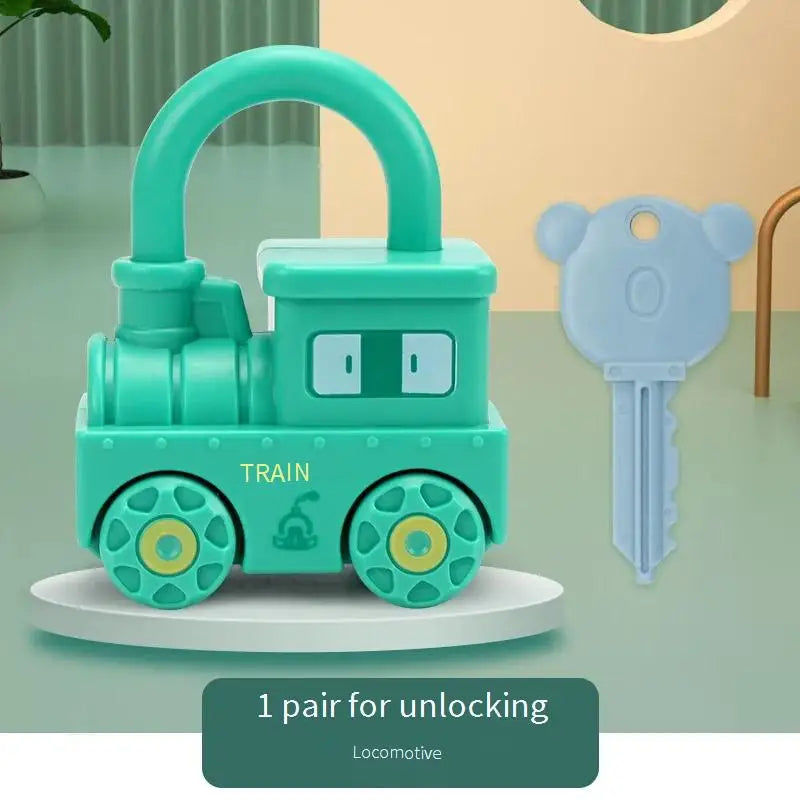
🔐 Match numbered keys to wooden locks
🔢 Turn unlocking into simple counting play
🖐 Pick, insert, turn & open each lock
🪵 Wooden board with real-feeling lock actions
🏡 Quiet screen-free tabletop activity
👨‍👩‍👧 Good for short parent-child play sessions
🚚 U.S. Shipping Available
🕒 Processing: 1–2 Business Days
🔁 Returns: Damaged, Defective, or Incorrect Items Only
🔒 Secure Payment via PayPal
Standard delivery usually takes 7–15 business days after dispatch. Import duties, taxes, or clearance-related charges may apply before delivery unless shown at checkout.

View full details

Montessori Lock and Key Number Toy for 3–6 Year Olds

Give your preschooler a real-feeling lock-and-key challenge that fits quiet tabletop play. This wooden Montessori-inspired toy pairs multiple locks and keys with clear numbers, turning each round into hands-on matching, key turning, and early counting without screens or noise.

Is This Lock-and-Key Number Toy a Good Fit for 3–6 Year Olds?

A lock-and-key toy should feel clear, practical, and easy to guide at home. This Montessori-inspired lock-and-key set is a tabletop activity for preschoolers around ages 3–6, with a wooden base, numbered locks, and matching keys that invite children to choose, insert, turn, and open.

The main play action is simple: pick a key, look for the matching number, line up the key with the lock, turn it, and check whether the lock opens. This gives each round a clear start and finish without needing lights, sound effects, or an app.

Because the set includes separate keys and lock parts, it works best on a stable tabletop with an adult nearby, especially in homes with younger siblings. Store the keys and locks together after play so the next session starts smoothly.

  • Recommended for children around ages 3–6 years
  • Wooden base with numbered locks and matching keys
  • Hands-on key turning, number matching, and simple counting play
  • Best used as a short tabletop activity with an adult nearby
  • Store keys and lock pieces together after each session

How This Lock-and-Key Number Toy Turns Numbers Into Hands-On Play

Every unlocking round asks children to complete a short action sequence: choose a key, compare the number, line it up with the keyhole, turn the key, and open the lock. These steps make number matching more concrete than simply looking at a printed card.

The numbered locks and keys let you add easy math prompts during play. You can ask your child to find number 3, count how many locks are open, or place the keys in order before trying each one.

Because the correct key creates an immediate result, children can notice when a key does not work, choose another one, and try again. That built-in feedback keeps the activity practical and easy to repeat.

  • Match numbers on keys and locks
  • Insert and turn keys during tabletop play
  • Count opened locks and remaining keys
  • Try one key at a time and adjust when it does not open

Why This Montessori Lock Toy Fits Preschool Play Without Feeling Too Simple

At around age 3, many children can begin with one lock and one matching key. A parent can place the pair on a mat, name the number, and show the child how to insert and turn the key.

As the child becomes more familiar with the motion, you can add more locks and keys. Older preschoolers can match numbers, work through a sequence, count which locks are open, or try to put the keys back in order.

This lets the same toy stay useful across different short sessions. The first session can be about opening one lock; later sessions can include number order, memory games, or simple turn-taking with a parent or sibling.

  • Around 3 years: try one lock and one key with help
  • Around 4 years: match several numbered keys and locks
  • Around 5–6 years: sort keys, count locks, and follow short unlocking sequences

How to Play with the Lock-and-Key Number Toy: Step-by-Step Activities

You do not need a teaching background to make this toy useful. A few simple routines are enough to turn it into a predictable quiet-time activity.

Start with one lock and one key so your child can focus on the motion. Then add more keys, more numbers, or a simple counting challenge as the activity becomes familiar.

  • One-lock start: Place one lock and one key on the table. Name the number, insert the key, turn it, and open the lock together.
  • Number match: Mix several keys and ask your child to find the key that matches a chosen lock number.
  • Counting round: Open each lock one by one and count how many are open.
  • Order game: Line up the keys from low to high before trying them in order.
  • Turn-taking play: Parent and child take turns choosing a key and checking which lock it opens.

What Makes This Toy Montessori-Inspired, Not Just a Wooden Gadget?

Montessori-inspired play often uses focused, hands-on tasks that children can repeat. This lock-and-key toy follows that idea by giving children a clear task: find the matching key and open the lock.

The material gives feedback through the action itself. If the key does not turn, the child can pause, compare the numbers again, and try another key. The adult can guide with a short question instead of correcting every move.

It is best used as a home activity or classroom-style shelf activity, not as a formal Montessori classroom material. The value comes from the repeated lock-and-key motion, visible numbers, and calm tabletop setup.

  • Focused task: match one key to one lock
  • Hands-on repetition through opening and closing
  • Number cues that make matching visible
  • Short guided sessions that fit home routines

Why Choose This Lock-and-Key Number Toy Over Busy Boards and Simple Number Puzzles?

Busy boards often offer many different switches, textures, and latches at once. They can be fun for exploration, but they do not always focus on one clear task. Basic number puzzles focus on numbers, but they rarely include real key-turning actions.

This toy sits between those two options. It gives children a practical lock-and-key action while also adding visible numbers for matching, ordering, and simple counting games.

For parents who want a quiet tabletop activity, it offers a repeatable routine: choose a key, match the number, open the lock, count the result, and reset for another round.

  • More focused than a broad busy board
  • More hands-on than a flat number puzzle
  • Combines lock actions with number matching
  • Easy to use in short quiet-time sessions

Questions Parents Often Ask About This Lock-and-Key Toy

What age is this Montessori lock-and-key toy best for?

It works best for many preschoolers around 3–6 years old. Around age 3, children can start with one lock and one key with adult help. Older preschoolers can work with several locks, match numbers, count opened locks, and follow short unlocking sequences.

How can parents introduce the lock-and-key toy at home?

Start with one lock and one matching key on a flat table. Show how the key goes in and turns, then invite your child to try. Once that feels familiar, add more locks, mix the keys, and use simple prompts such as “Can you find number 4?” or “How many locks are open?”

What can children do with the numbered locks and keys?

Children can match a key to the same number on a lock, insert and turn the key, open the lock, count how many are open, and place the keys in number order. These actions turn the toy into a short counting and matching activity.

How do I keep the activity interesting after the first few rounds?

Change the prompt instead of changing the toy. Use one-lock practice, number matching, counting rounds, order games, or parent-child turn-taking. Keeping sessions short helps the activity stay fresh and easy to repeat.

What does Montessori-inspired mean for this lock toy?

It means the toy uses hands-on repetition, a focused task, and clear feedback from the material itself. The correct key opens the matching lock, while a different key invites the child to compare, choose again, and try another match.

How does this compare to a busy board or basic number puzzle?

A busy board often gives children many unrelated actions at once, while a basic number puzzle usually focuses only on fitting pieces into place. This lock-and-key number toy combines a practical key-turning action with number matching, counting, and short tabletop games.

Product Details & Specifications

Key property Details
Product name Montessori Lock and Key Number Toy for 3–6 Year Olds
Material Wooden base with lock fixtures and numbered keys; exact wood species, finish, and hardware specifications not confirmed in source listing.
Recommended age Approx. 3–6 years; includes separate keys and lock parts for guided tabletop play.
Categories Age: 3–4 Years; 4–6 Years · Material: Wooden Toys
Key play actions Hands-on key turning; number matching; counting; ordering keys; parent-child tabletop games.
Dimensions Dimensions and weight should be confirmed from final product data before publication.
Use note Use on a stable tabletop with an adult nearby. Store keys and lock parts together after each session, especially in homes with younger children.