
Hands-On First Math Activities for Learning Plus and Minus

Early plus-and-minus practice often breaks down before the child reaches the math. When the move cannot be seen clearly, the task stays too abstract, the adult ends up carrying the routine, and the activity starts to feel heavier than it looked.
A better first activity does not try to teach everything at once. It makes the next move easy to see, keeps the result visible long enough to review, and can run again without rebuilding the whole setup.
Quick Take
- Choose a format that keeps the move visible, lets the result stay reviewable, and can run again without much reset drag.
- Adjust the task when the symbols still feel too abstract by reducing prompt load and making the action path easier to inspect.
- Stop treating the activity as a good fit when the child cannot read the change, the adult has to rescue every move, or the format keeps drifting into explanation instead of practice.
Quick Win
Most first math routines fail because too much effort is spent getting started, so the child meets explanation before action. That creates friction early, and the adult starts doing more of the work than expected.
The better filter is not novelty. It is whether the task shows the move clearly and can be repeated without rebuilding the whole scene. Adding more materials does not solve a task path that was never easy to see.
Quick filter
- Pick a format where the change can be seen right away.
- Keep the prompt short enough that the child can stay with the action.
- Use a setup that can be reset without turning the routine into work.
- Stay with visible review before adding more variety.
Do not expand the setup just because the child loses focus.
Best first step
- Give one simple plus-or-minus prompt.
- Let the child arrange or rotate the visible parts.
- Pause on the result and review what changed.
- Run the same loop again before changing the format.
The goal here is a stable loop, not a broad lesson.
What to avoid early
- Do not add more pieces when the real problem is that the change is still hard to see.
- Do not turn first practice into a long explanation before the child gets to act.
- Do not switch formats too quickly before one short loop becomes repeatable.
More materials do not fix a blurry task path.
Why early plus and minus often need a concrete start
Verbal prompts alone often ask the child to hold too much in mind, so the math feels blurry before it feels manageable. That blur creates hesitation, and the routine can start feeling harder than it actually is.
A concrete start works better because the change can be seen first. When the child can see what shifted, correction gets lighter and the task becomes easier to trust. A fun-looking activity is not enough if it still leaves the relation hard to notice.
What a concrete start should do
- Make the change visible instead of spoken only.
- Keep the relation on the task surface long enough to inspect.
- Lower memory pressure so the child can stay with the move.
A concrete start should reduce abstraction, not decorate it.
What makes a hands-on math task easier to check together

A task that seems easy to set up can still carry a hidden cost when the answer disappears too quickly or stays too vague to review. Then the adult gets pulled back into the operator role, patience drains faster, and the routine starts feeling heavier than its setup promised.
The stronger format keeps the result on display long enough to inspect. A partially self-checking task can still be useful if the child can adjust and retry with the same output in view. The weak low-prep option is the one that looks simple but forces constant interpretation because the checking logic never settles.
Visible review checks
- The arranged result stays visible after the move.
- The child and adult can point to the same output.
- The task allows correction without restarting from scratch.
A visible review loop can still work even without a locked right-or-wrong stop.
Why a compact rule-based format can work well for first practice

Loose-piece formats can create unnecessary drag when the child is still trying to understand the move itself, because too much attention gets spent on managing the setup. That extra handling work can make the activity feel bigger than it needs to be.
A compact rule-based format works better when it keeps the symbols visible and channels the child toward a readable relation without asking for a full construction task. That lowers decision load and makes repetition easier to maintain. The false shortcut is choosing the broadest-looking option when the real need is a format that stays clear, compact, and repeatable.
What this format does well
- Keeps numbers and operators on the task surface.
- Supports a short arrange-review-adjust loop.
- Gives structure without turning into open-ended drift.
This is strongest as a practice tool, not as a complete teaching system.
Where the value comes from
- Less setup drag when the symbols are already built into the format.
- Lower restart cost when the same loop can run again quickly.
- Clearer review when the relation remains visible during correction.
Useful value should map to routine relief, not to broad claims.
How to tell whether the task matches the learner stage
A task can look reusable and still become something the family quietly stops taking out when the fit is off. The child tires quickly, the adult starts anticipating resistance, and the routine collects avoidance instead of momentum.
A better screen does not start with broad age claims. It starts with whether the learner can recognize the symbols well enough to stay inside a short visible loop. That is what protects reuse. Forcing a near fit often leads to constant adult recovery instead of stable practice.
Stage-fit signals
- The child can recognize at least some numerals or operation marks.
- The child can stay with one short rule-based move.
- The child can discuss what changed after the move.
Broad listing labels are weaker than direct fit signals.
When fit is weak
- The symbols stay too abstract to review clearly.
- Every move depends on adult rescue.
- The routine keeps stalling before the child sees the relation.
Weak fit usually shows up as strain, not as obvious failure.
What to check before choosing a math tool

A vague listing can create false confidence because the broad promise sounds easier than the real screening work. That is how families end up with a tool that looks suitable on paper but still adds decision load the moment it reaches the table.
The safer route is simple: verify the symbol layout, check whether version differences change the task, and refuse to treat seller language as proof. That usually saves more time than trying to rescue a weak purchase later.
Buying checks that matter
- Confirm the printed symbol layout.
- Check whether version differences change the task path.
- Treat seller claims as verification items, not as settled facts.
- Choose the tool for visible practice, not for total coverage.
Unverified claims should stay in the check pile, not in the trust pile.
Final screen
- Pick the tool if it keeps the move visible, repeatable, and stage-fit.
- Walk away if the listing creates more uncertainty than the task removes.
The cleanest decision usually comes from clarity, not from bigger promise language.
Wrap-up checks
The best first plus-and-minus activity is the one that keeps the move visible, keeps review simple, and stays repeatable without asking the adult to carry the whole task.
- The child can see what changed after the move.
- The adult can review the same output without guessing intent.
- The format can be used again without heavy reset drag.
- The task matches the learner stage closely enough to avoid constant rescue.
Search again when the symbols still feel too abstract, the routine keeps stalling, or the listing details remain too uncertain to screen confidently.
Use these checks to compare any candidate format against visible review, repeatability, and stage fit before treating it as a serious option.
FAQ
What makes a hands-on first math activity better than verbal practice alone?
It works better when the change stays visible enough for the child to inspect instead of relying on spoken explanation alone.
A stronger entry task lowers abstraction by keeping the relation on the task surface long enough to review. That makes early correction easier because the child can see what changed instead of reconstructing the move from memory.
Does the activity need a built-in right-or-wrong stop to be useful?
No. A task can still be useful when it supports visible review and adjustment even without a locked stop.
The key test is whether the result stays visible long enough for the child and adult to inspect the same output. What matters is not a hard stop by itself, but whether the checking logic stays clear.
Can a compact manipulative be enough for early plus-and-minus practice?
Yes, when it keeps the symbols visible and supports a short repeatable practice loop.
Its value is strongest when the goal is clear visible practice rather than broad lesson coverage. The right question is whether it improves clarity and reuse, not whether it claims to replace everything else.
How do I know whether the task fits the learner stage?
It fits better when the learner can recognize at least some symbols and stay with a short visible rule-based move.
Broad listing labels are weaker than direct fit signals such as symbol recognition, reviewability, and tolerance for short structured loops. Weak fit usually shows up as repeated stall points, fast avoidance, or constant rescue.
What should I check if the listing shows different versions or top designs?
Check the exact symbol layout and confirm whether visual differences mean separate versions or a single bundle.
Version differences can change what kinds of prompts the tool can actually support, so this is not a cosmetic detail. Mixed visuals and seller language should stay in the verification pile until the details are clear.
Recommended picks
Quick matches for this article

For visible practice loops, Rotating Arithmetic Numbers Cube Toy aligns with compact math symbols.
Rotating Arithmetic Numbers Cube Toy for Kids
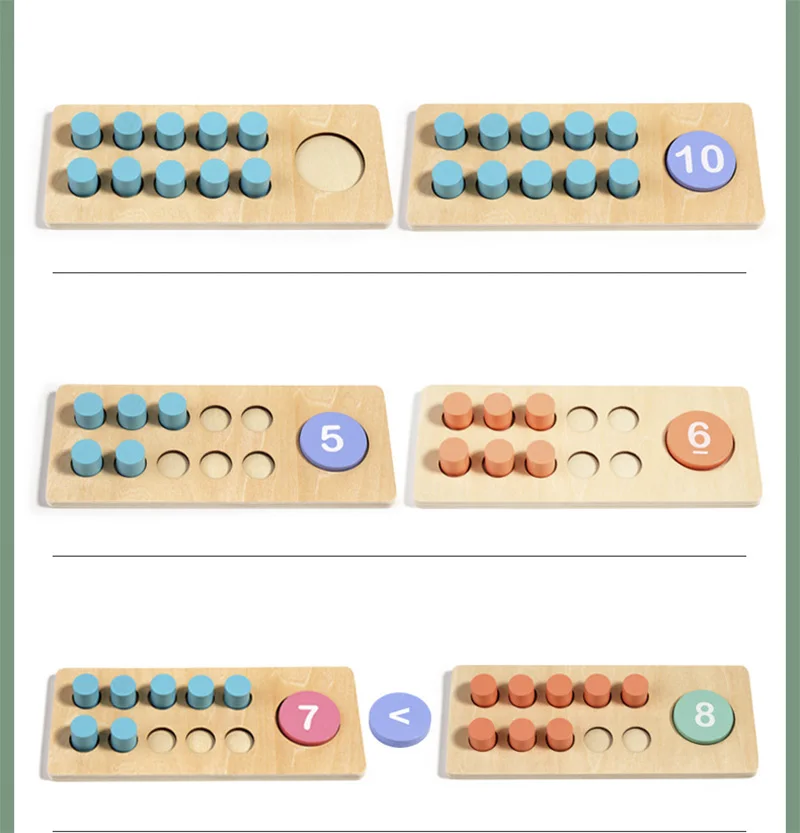
Wooden ten-frame math set for first addition practice — board, cards, and tokens.
Wooden ten-frame math set for addition and subtraction

Wooden Finger Counting Board for hands-on review — number blocks and math cards.
Wooden Finger Counting Board | Montessori Math Toy

For broader early math practice, Montessori Math Learning Toy aligns with hands-on counting.
Montessori Math Learning Toy for Toddlers and Preschool
![[Quantity Sense]Can a Child Count but Still Lack Number Sense?](http://learnplayful.com/cdn/shop/articles/cover_image_85e5ec93-0bcc-4c4d-a429-c4e5dba3fa04.png?v=1776181279&width=533)


