![[Quantity Sense]Can a Child Count but Still Lack Number Sense?](http://learnplayful.com/cdn/shop/articles/cover_image_85e5ec93-0bcc-4c4d-a429-c4e5dba3fa04.png?v=1776181279&width=1100)
[Quantity Sense]Can a Child Count but Still Lack Number Sense?

Yes. A child can sound fluent at counting and still miss what the count means. The real problem is not the spoken sequence. It is the gap that appears when the child cannot hold the total, compare two groups, or handle one more without starting over.
That gap costs more than a rough math moment. It keeps adults reading performance as progress while the underlying quantity logic stays thin. The better screen is simple: look at what the child understands after the count ends, not just how high the count goes.
On this page
Quick Win
The real answer to can a child count but still lack number sense is yes, and the hidden trap is that the performance can look convincing enough to delay the right screen. When the child can recite the number words but cannot keep the total in mind after counting, adults often assume the foundation is already there and miss the actual gap.
Experienced screening starts after the count ends, because that is where the weak link shows itself. A child who must recount to tell which group has more or to answer how many is not failing at effort; the child is showing that the spoken sequence has not fully attached to amount, which is why counting higher is the wrong shortcut.
Decision Summary
- Choose checks that reveal quantity after the count, not just a longer count sequence.
- Narrow your screen to total recall, more-less judgment, and one-more response.
- Walk away from the idea that fluent counting alone proves understanding.
A single rough moment is weak evidence. The pattern matters more than the isolated miss.
Counting Words vs Quantity Understanding

When parents ask whether a child can count but still lack number sense, they are usually seeing a split between spoken order and understood amount. That split creates a false sense of security, because the child sounds capable while the part that supports comparison, total meaning, and flexible thinking is still shaky.
The expert filter is simple: counting words move in order, but quantity understanding has to stay alive after the last word is said. That is why counting words vs quantity becomes the key contrast here, and why pushing for a bigger performance usually misfires when the child still cannot read what the finished count means.
What Changes the Meaning
Counting words
A learned spoken sequence
It can sound strong even when the total still disappears after the count.
Quantity understanding
A held amount with relationship
It shows up when the child can compare groups and handle a small change without a full restart.
Why the split matters
Performance can mask the weak link
Later math depends on stable amount, not longer recitation.
The same child can look fluent in one lane and fragile in the other.
Signs of Words Without Quantity
The clearest signs usually show up in ordinary moments, not in formal performance, and that is exactly why they get missed. The child can look competent during the count but then lose the thread as soon as the task asks for meaning rather than recitation, which makes the gap easy to misread as distraction or inconsistency.
Experienced readers look for the failure path, not the polished moment. If more-less breaks down, if the total will not stay put, and if tiny sets never become easier to read, the pattern points away from a motivation problem and toward weak quantity grounding.
What the Pattern Usually Looks Like
- The child counts a group correctly but still cannot tell which side has more without starting over.
- The child finishes a count, hears the question again, and recounts instead of holding the total.
- Small groups still need one-by-one effort every time, so subitizing does not seem to take hold.
A repeated cluster of these signs of weak number sense is more useful than any single isolated example.
Simple Home Checks to Try First

The best home number sense checks are small, plain, and hard to fake, because they force the child to show what survives after the spoken count. That matters because a child can borrow momentum from the sequence itself, but cannot hide as easily when the task asks for total recall or a clean more and less judgment.
These checks work because they expose the exact place where the logic loop breaks. Instead of asking for a bigger performance, they test whether the amount is stable enough to be held, compared, and updated, which is far more useful than repeating drills that only make the recital sound smoother.
Low-Pressure Home Number Sense Checks
- Count a small set together, then ask for the total again without touching the objects.
- Place two visible groups side by side and ask which has more and which has less before any recount begins.
- Finish one count, add one item, and ask what changed without restarting the whole sequence.
Keep the setup small and calm so the check reveals quantity understanding rather than attention overload.
Why One More Still Feels Hard

A full restart after one more is usually a boundary signal, not a small mistake, because it shows the count did not settle into a stable total. The hidden cost is that adults may keep asking for smoother performance while the child stays trapped in a loop where every tiny change feels like starting from zero again.
The experienced read is not just that one more looks hard. It is that cardinality has not fully locked in, so the child cannot treat the finished set as a held whole that can be adjusted, which is why more repetition of the sequence is a false shortcut when the amount itself still slips away.
Play Routines That Build Quantity Sense

The right routine is not the one that looks busiest. It is the one that keeps quantity visible without turning the adult back into a constant operator, because restart friction quietly drains patience and makes the whole practice window easier to avoid. When a routine feels cluttered or tiring to relaunch, it often dies before repetition does its work.
Experienced choices stay low-load on purpose. The point is not to count higher but to keep the same amount, the change in amount, and the final total easy to see again, because that is the route that builds hold-and-update logic instead of creating another performance lane that sounds better than it transfers.
What the Better Routine Does
- Keep quantity visible with short compare-and-check moments instead of chasing a longer spoken count.
- Reuse simple tabletop setups that make the final total easy to revisit after a small change.
- Return to the same logic loop often enough that the child notices totals, differences, and updates more quickly.
If the routine feels messy or heavy to restart, it often gets dropped before the learning pattern has time to stick.
When to Watch and When to Ask
The useful boundary is calm: watch the pattern, not the isolated stumble. Trouble starts when one rough moment gets stretched into a bigger story, because that replaces careful screening with guesswork and makes the next move less clear, not more.
The stronger signal is repetition across everyday quantity moments. When the same weak points keep returning even after simple practice, the issue is more likely to be a real logic gap than a passing off moment, and that is when it makes sense to stop assuming fluent counting tells the whole story.
Wrap-up checks
Yes—choose quantity checks over counting performance when the total still does not hold, and if that pattern keeps repeating, step back from recital-based proof and return to simple comparison and change tasks.
Done criteria
- The child can finish a small count and keep the total in mind without defaulting to a recount.
- The child can read which group is larger or smaller without needing the full sequence every time.
- A one-more change no longer turns the whole task into a complete restart.
Search again when the same friction keeps showing up across calm quantity tasks even after simple compare-and-check routines have been repeated enough to give the pattern a fair read.
Use a short, repeatable tabletop check for a while and watch whether totals, differences, and small changes become easier to hold.
FAQ
Number words can be memorized before quantity meaning becomes stable. That is why fluent counting can coexist with weak comparison, weak total recall, or a full restart when one more is added.
The cleaner screen is not how smooth the count sounds. It is whether the child can hold the amount after the count finishes.
A child who needs to recount to tell which group has more is showing a gap between performance and quantity reading.
Losing the total after counting and restarting after one more are strong clues that the amount is not yet staying mentally stable.
Count a small set, then ask for the total again without touching. Place two visible groups side by side and ask for the larger one before any recount starts.
Keep the setup light. The goal is to reveal quantity understanding, not to test how much extra demand the child can handle.
When the child cannot hold the finished quantity as a whole, one more does not feel like a small adjustment. It feels like a new counting job.
That is why this moment points back to fragile quantity meaning rather than to a simple lack of effort.
Short compare-and-check routines work better than recital-heavy drills when the problem sits in the meaning of the amount rather than in the spoken order.
The most useful routine is often the one that is easy to repeat, because restart friction can kill practice before it becomes useful.
One rough moment is weak evidence on its own. A repeated pattern across total recall, comparison, and one-more response is more meaningful.
That repeated pattern matters because it shows the gap is not limited to a single task format or a single off moment.
Recommended picks
Quick matches for this article
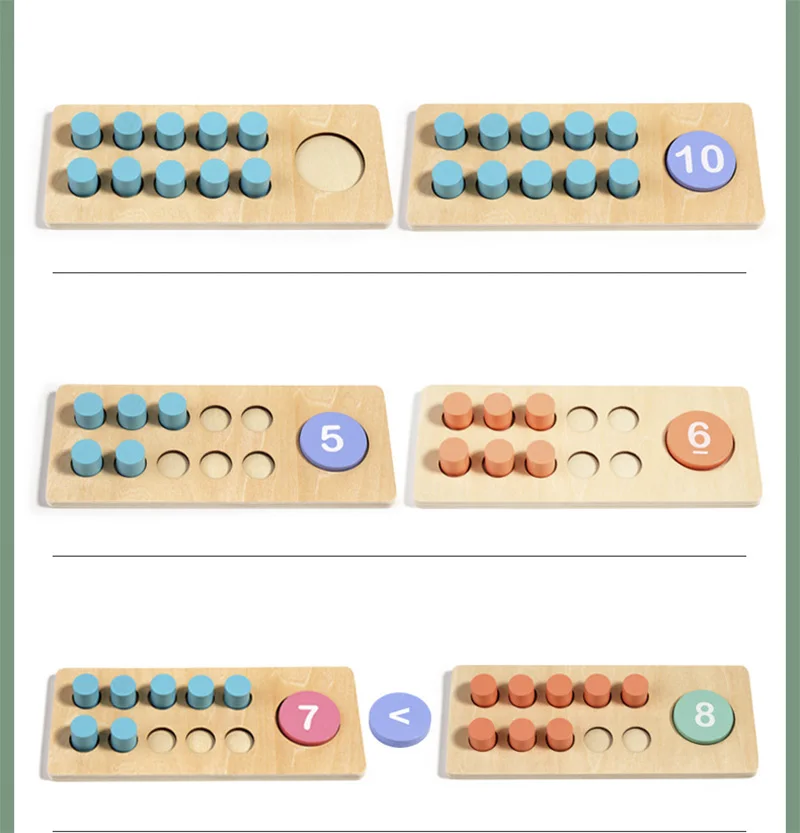
For visible quantity checks, this ten-frame kit keeps number board, cards, and tokens together.
Wooden ten-frame math set for addition and subtraction (number board + cards + tokens)

For early number meaning, this counting board pairs number blocks with math cards.
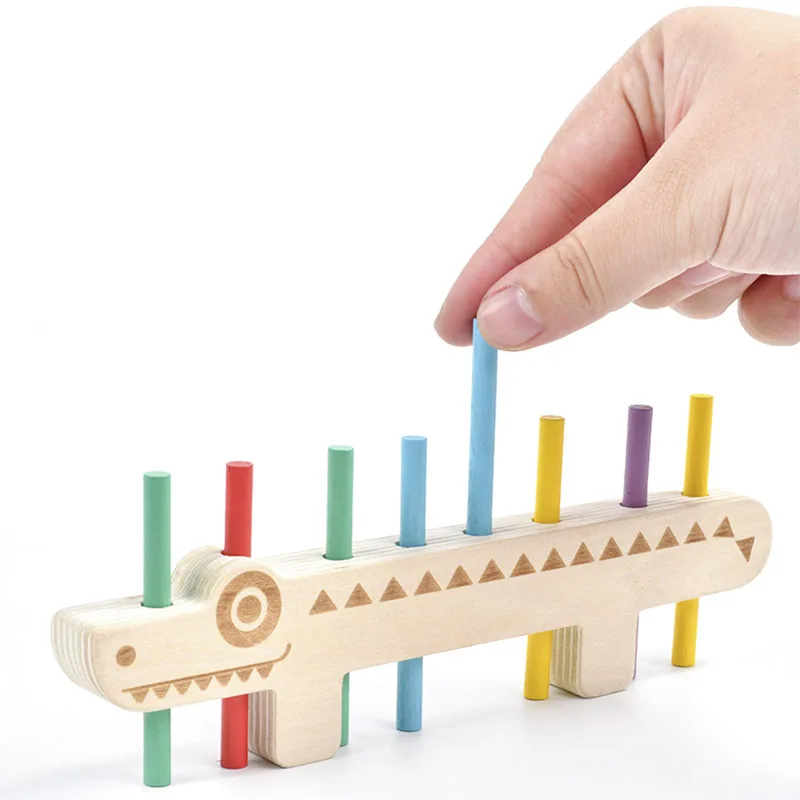
For short tabletop checks, this peg board adds counting sticks and activity cards.

For guided counting practice, this sorting set adds bowls, tongs, and mixed counters.
Animal Classification Toy Set with Bowls and Tongs

For contained counting practice, this sealed maze supports early counting on a travel-ready board.


![[Quantity Sense]Why Can My Child Count but Not Understand Quantity?](http://learnplayful.com/cdn/shop/articles/cover_image_cd8dfcc1-e4ad-43de-bcd2-b7e4ed779e8c.png?v=1776215891&width=533)
![[Quantity Sense]Why a Child Can Count but Still Not Understand More or Less](http://learnplayful.com/cdn/shop/articles/cover_image_eff7add6-5c60-4e49-9e3a-be9f41865823.png?v=1776213553&width=533)