
![[Quantity Sense]Why a Child Can Count but Still Not Understand More or Less](http://learnplayful.com/cdn/shop/articles/cover_image_eff7add6-5c60-4e49-9e3a-be9f41865823.png?v=1776213553&width=1100)
[Quantity Sense]Why a Child Can Count but Still Not Understand More or Less

If your child can count but still guesses which group has more or less, treat it as a quantity-meaning gap before treating it as an effort problem. The hidden cost is false confidence: smooth counting can make the skill look stronger than it really is, so the real weakness stays out of view.
The useful screen is simple and concrete: watch what happens with short visible sets, then judge the pattern by whether comparison becomes clearer or stays stuck.
On this page
Quick Win
The fastest read on this pattern is that the counting words are ahead of the quantity meaning. That mismatch creates a quiet trap: a child can finish a count and still guess which set is bigger, so the problem hides behind a performance that sounds stronger than it is.
Experienced screening starts with visible groups because that shows whether the child is reading amount or only reciting a sequence. Pushing harder on counting alone can look productive, but it often covers the exact skill that is not yet stable.
Quick screen
- Use short side-by-side sets before longer counting routines.
- Treat fluent counting as partial evidence until the child can read more, less, and the same.
- Judge the pattern across ordinary moments, not one clean attempt.
Counting Words Are Not the Same as Quantity Meaning

Counting words and quantity meaning should be treated as separate checks, not one skill with two faces. The hidden cost of merging them is false confidence: the child sounds ready while comparison stays unstable.
Experienced screening looks for whether a number word is tied to a stable visible amount, because that link is what makes more and less readable. The shortcut is to assume that a familiar count sequence will naturally carry comparison with it, but that shortcut is where the real signal gets lost.
What to separate when you screen this pattern
Counting words
Can sound stable without proving that the amount is understood
Treat as partial evidence
Quantity meaning
Shows whether a number maps to a visible amount
Use as the cleaner screen
Comparison
Reveals whether more, less, and the same are readable
Use before trusting fluency
The goal is not to downgrade counting, but to stop overreading what it proves.
Why More and Less Still Feel Hard

More and less stay slippery when each set is not yet understood as a whole. The debt shows up fast: the child may hesitate, guess, or change the answer when the groups are close, which makes ordinary practice feel oddly unproductive.
Experienced screening watches whether the child can hold a set steady enough to compare it, notice a small change, or match a spoken number to an amount. The naive shortcut is to add more counting drills, but the better route is compare-first practice because that exposes where the meaning link breaks.
Simple Home Checks That Make Quantity Visible

Home checks work only when the setup stays short and readable, because a messy layout creates false difficulty before the comparison even begins. The hidden cost of a loose, cluttered routine is that the adult ends up doing rescue work, and the practice starts feeling tiring before the real signal appears.
Experienced screening strips the task down to short side-by-side sets because that makes it easier to tell whether the child is reading quantity or reacting to spread and shape. The false shortcut is to assume that more materials create more learning, but extra visual load usually blurs the exact thing you are trying to verify.
Low-load way to check the skill
- Use a short pair of visible sets.
- Keep the layout calm and easy to read.
- Repeat the same kind of comparison in ordinary moments such as snacks or toys.
- Watch whether the answer becomes clearer across routines instead of looking for one polished pass.
The aim is not a perfect lesson. The aim is a clean read on the comparison skill.
When This Still Looks Like a Normal Delay
This still looks like a normal delay when visible comparison starts helping, even if the child is not yet smooth. The real relief is movement: once the task is concrete, the child begins to notice differences that were blurry before.
Experienced screening cares less about polish and more about whether the child can increasingly read small everyday sets without leaning on guesswork. The shortcut is to chase a perfect performance too early, but the better filter is steady improvement across ordinary moments.
When It Stops Looking Like a Simple Lag
It stops looking like a simple lag when the same confusion stays in place even after the comparison is made clear and repeated. The cost is not only the wrong answer; it is that the pattern refuses to settle across ordinary moments, which makes vague reassurance less useful.
Experienced screening looks for persistence and spread of the difficulty, not one rough attempt. The shortcut is to explain every miss as temporary, but that can delay a more useful conversation about what the child is consistently unable to read.
What to Do Next Without Overreacting
The next move is to stay concrete, not to push harder. The hidden trap is overreacting in one direction or dismissing the pattern in the other, because both choices block a clean read on whether quantity meaning is actually building.
Experienced screening turns observations into a usable pattern: what the child could compare, where the confusion showed up, and whether visible support changed the result. The shortcut is to rely on memory and general worry, but specific examples make the next decision cleaner.
Wrap-up checks
Treat this as a quantity-meaning gap until visible comparison says otherwise; if the pattern stays broad across ordinary checks, step back from more counting drills and review specific examples of where it holds or breaks.
Done criteria
- Visible comparison becomes easier across ordinary moments.
- Small sets can be judged with less guesswork.
- Number words start to line up more reliably with real amounts.
Search again when the confusion stays broad even with short visible comparisons, or when the pattern becomes harder to describe clearly from memory.
Keep the next round simple: short side-by-side sets, calm layouts, and brief notes on what changed.
FAQ
Memorized counting words and stable quantity meaning do not always grow at the same pace.
The cleaner check is whether the child can compare visible sets and notice which group has more, less, or the same.
That format makes the child read quantity rather than lean on a long count routine.
Keep the materials familiar and the layout calm so the comparison signal stays easy to see.
Some children need more time before comparison becomes stable.
The stronger signal is whether visible comparison begins to improve once the task is concrete and repeated in daily routines.
Look more closely when comparison stays unreliable instead of gradually becoming clearer.
Pay attention to persistence across settings rather than a single rough moment.
That makes the next step more useful because the discussion stays tied to observed behavior rather than vague worry.
The goal is not to build a long record, but to keep the pattern concrete enough to judge clearly.
Recommended picks
Quick matches for this article
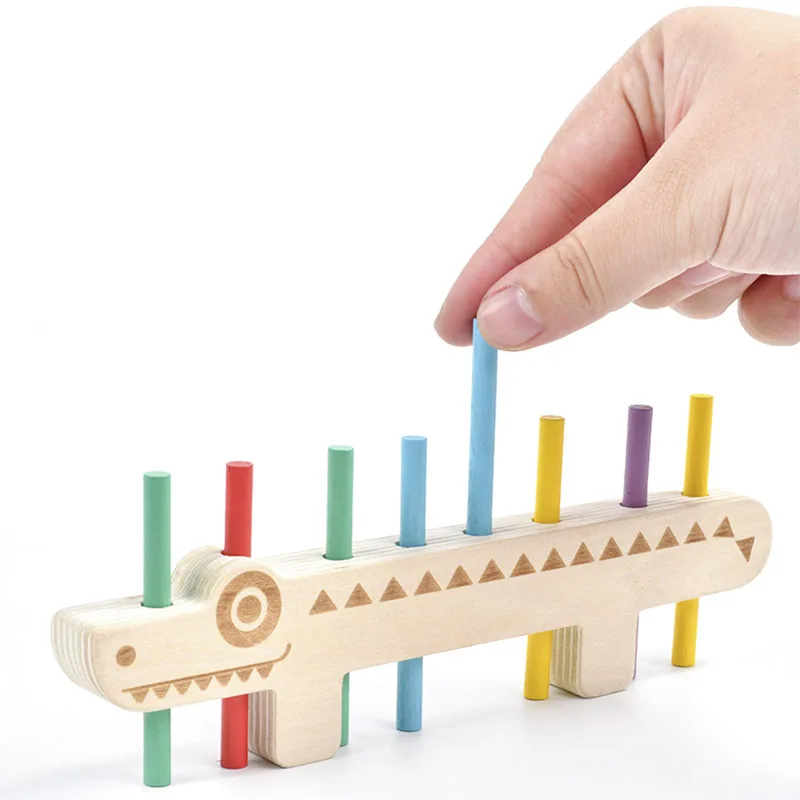
For short tabletop checks, this peg board pairs activity cards with early counting.
Color Matching Peg Board | Counting Sticks & Cards
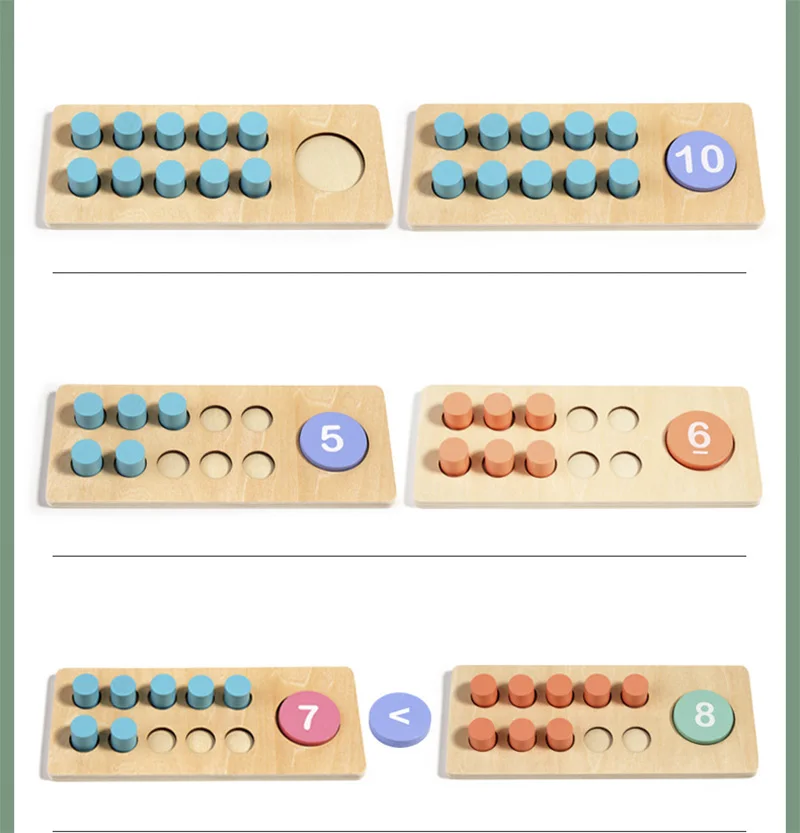
For visible quantity practice, this ten-frame set aligns with a number board, cards, and tokens.
Wooden ten-frame math set for addition and subtraction (number board + cards + tokens)

For concrete number practice, this counting board aligns with number blocks and math cards.
Wooden Finger Counting Board | Montessori Math Toy

For guided counting at the table, this sorting set aligns with mixed counters and bowls.
Animal Classification Toy Set with Bowls and Tongs

For short supervised sessions, this tray game aligns with question cards and divided storage.
Carrot Harvest Sorting Tray Game with Cards & 24 Pieces
![[Quantity Sense]Why Can My Child Count but Not Understand Quantity?](http://learnplayful.com/cdn/shop/articles/cover_image_cd8dfcc1-e4ad-43de-bcd2-b7e4ed779e8c.png?v=1776215891&width=533)
![[Quantity Sense]Can a Child Count but Still Lack Number Sense?](http://learnplayful.com/cdn/shop/articles/cover_image_85e5ec93-0bcc-4c4d-a429-c4e5dba3fa04.png?v=1776181279&width=533)

