
![[Quantity Sense]Why Can My Child Count but Not Understand Quantity?](http://learnplayful.com/cdn/shop/articles/cover_image_cd8dfcc1-e4ad-43de-bcd2-b7e4ed779e8c.png?v=1776215891&width=1100)
[Quantity Sense]Why Can My Child Count but Not Understand Quantity?

Usually, this means the counting sequence is present while quantity meaning is still unstable. That mismatch matters because confident-sounding counting can hide the real friction and push practice toward the wrong target.
The useful screen is not how far the count goes, but whether visible amounts, simple comparisons, and one-more changes still fall apart. Start by making quantity easier to see, and keep condition labels as a later boundary rather than the opening assumption.
On this page
- Quick Win
- Why Counting Words Do Not Build Quantity Sense by Themselves
- What Number Sense Looks Like in Daily Moments
- Signs the Problem Is Quantity Meaning, Not Just Slow Recall
- Why Estimation and Plus-One Feel Hard
- Simple Ways to Make Quantity Visible at Home
- When to Seek Extra Support
- Wrap-up checks
- FAQ
Quick Win
If you are wondering why your child can count but not understand quantity, the usual answer is that the counting sequence is present while quantity meaning is still unstable. That mismatch is costly because smooth recitation can make the real problem look smaller than it is, so practice keeps targeting performance instead of meaning.
Experienced screening starts here because counting words and quantity are linked but not interchangeable: one follows an order, while the other holds a visible amount steady and lets the last count stand for the whole set. The false shortcut is to ask for more counting when the child still cannot read more, less, same, or one more without the whole task slipping.
Fast screen
- Treat the issue as quantity meaning when spoken counting sounds smoother than visible comparison.
- Narrow the task down to small visible sets before asking for longer counting runs.
- Step back and watch the pattern across comparison, matching, and one-more change instead of judging by recitation alone.
Why Counting Words Do Not Build Quantity Sense by Themselves
The count vs quantity split matters more than many parents are told. When a child can say the sequence but cannot hold the set as a whole, every correct-sounding count can still end in a weak answer about how many.
The mechanism is simple: quantity sense asks the child to keep each count attached to one object or visible group and then let the final count stand for the total. The wrong route is to treat this like a memory-length problem, because longer recitation does not repair a weak link between words, objects, and total.
What Number Sense Looks Like in Daily Moments

Real quantity understanding looks quieter and more stable than many people expect. The gain is not just smoother performance; it is less drift, less rebuilding, and less uncertainty when small visible groups change.
That is why experienced screening looks for proof in daily moments rather than in long counting runs: a child with stronger number sense can read very small groups more directly, match a spoken number to a visible set with less wobble, and keep simple comparisons from collapsing. The shortcut to avoid is using long counts alone as proof that the meaning is already there.
What to watch for today
- Watch whether the child reads very small groups more directly instead of recounting every item.
- Watch whether a spoken number matches a visible set with less drift.
- Watch whether more, less, same, or one-more changes stay readable without rebuilding the whole task.
Signs the Problem Is Quantity Meaning, Not Just Slow Recall
This explanation fits when the weakness stays wider than slow recall. The real debt is that a child can sound ready while still getting lost in comparison, one-more change, and total tracking, which delays the right kind of support.
The better screen is repeated friction across small visible tasks, not one awkward session: if visible groups, numerals, and simple quantity changes do not connect reliably, the issue is more likely about quantity meaning than about pace alone. The shortcut to avoid is judging progress by how fluent the count sequence sounds.
Why Estimation and Plus-One Feel Hard

Plus-one and estimation usually feel hard because the starting amount never settles enough to support the next move. The result is restart friction, and that makes simple tasks feel heavier than they look.
The mechanism is not extra complexity; it is instability in the original set. When the child cannot hold the first amount, the symbol-quantity link stays weak, estimation friction rises, and every change starts to feel like a fresh decoding problem. The wrong fix is to reset the whole task instead of letting the child compare the original amount and the changed amount side by side.
Simple Ways to Make Quantity Visible at Home

The best home support is usually smaller, calmer, and more repeatable than people expect. When a routine demands too much setup or too many resets, patience drains fast and the activity turns into something families avoid.
Experienced operators reduce visible load before they ask for more skill: a few identical objects, one active comparison, and a stable layout make quantity easier to see and easier to check again. The false shortcut is to add more materials or longer runs when the child still cannot read the meaning in a simple setup.
Low-load moves that make quantity visible
- Use a few identical objects in small bounded groups so the amount is easy to read.
- Keep one active comparison at a time, such as side-by-side groups or a before-and-after one-more change.
- Ask short check questions like which has more, which is the same, or what changed before asking for a longer count.
Keep the task readable before making it longer.
When to Seek Extra Support
Do not jump straight to condition labels, but do not keep treating a broad pattern like a small practice miss. If you are deciding when to seek evaluation, use breadth and persistence as the screen rather than one hard session.
That boundary matters because some worry comes from shaky practice design, while a more stable cross-task pattern deserves closer attention. The shortcut to avoid is waiting only because the child can still recite numbers well; broad difficulty across comparison, one-more change, numeral matching, and total tracking is the stronger signal.
Wrap-up checks
Treat this as a quantity-meaning gap when counting sounds stronger than visible comparison and simple quantity change; if the same pattern stays broad, move from home observation toward evaluation instead of adding more rote counting.
Done criteria
- You can tell whether the child holds a visible amount steady after counting.
- You can see whether comparison and one-more checks improve when the setup stays small and readable.
- You can separate a practice-design problem from a broader persistent concern.
Search again when calm visible practice still leaves comparison, numeral matching, and total tracking broadly unstable, or when the pattern starts to look more concerning rather than clearer.
Use small visible comparison moments in daily routines and watch whether the child can hold the amount, not just say the sequence.
FAQ
Weak quantity understanding can appear without confirming any condition.
The more useful starting check is whether the same quantity problems show up across small visible tasks.
Evaluation becomes more relevant when the difficulty stays broad, persistent, and concerning over time.
Long counting sequences can sound strong while quantity meaning remains shaky.
The better check is whether the child can connect spoken numbers to visible amounts and simple changes.
It matters because it helps the child treat quantity as something visible, not only something recited.
That makes comparison and simple quantity change easier to read without constant rebuilding.
Counting words still matter, but they work better when paired with visible group work.
A better shift is to add compare, match, and one-more checks instead of relying on recitation alone.
It is worth asking when the same difficulties show up across different simple tasks rather than in one isolated moment.
It is also worth asking when frustration or avoidance grows and calm home practice does not change the pattern.
Recommended picks
Quick matches for this article
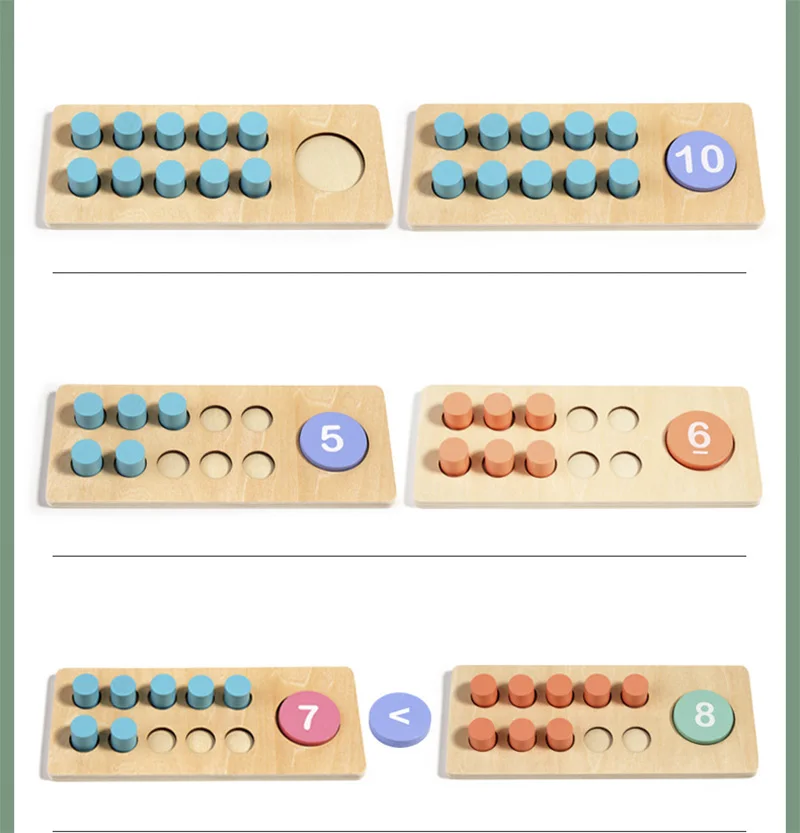
For visible quantity work, this ten-frame kit pairs a number board with cards and tokens.
Wooden ten-frame math set for addition and subtraction (number board + cards + tokens)

For hands-on number meaning, this counting board combines number blocks with math cards.
Wooden Finger Counting Board | Montessori Math Toy
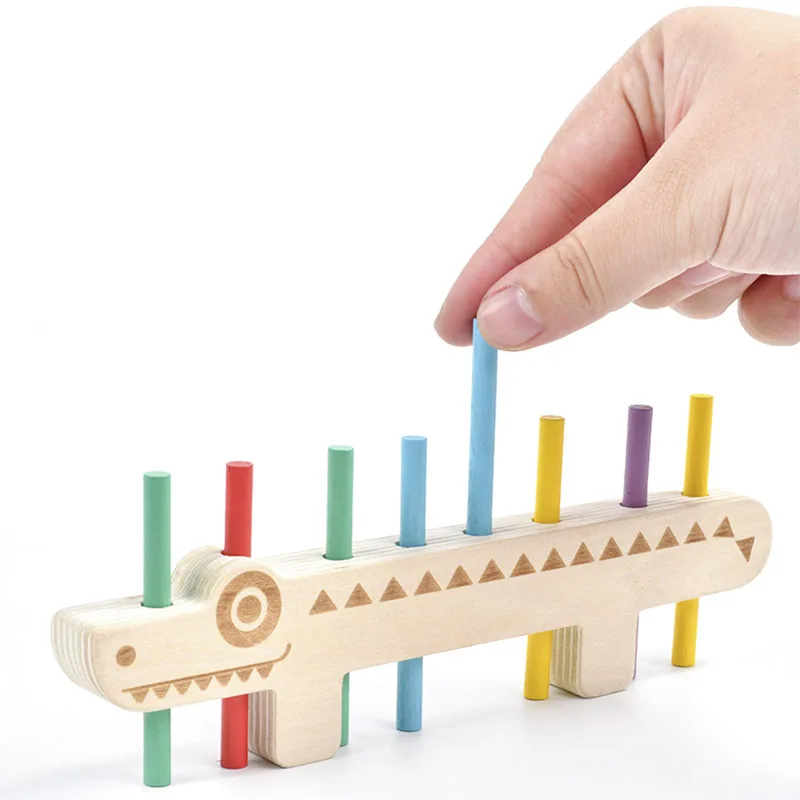
For supervised tabletop practice, this peg board adds cards, sticks, and early counting.
Color Matching Peg Board | Counting Sticks & Cards

For short tabletop grouping, this sorting set uses bowls, tongs, and mixed counters.
Animal Classification Toy Set with Bowls and Tongs

For guided early counting, this number maze stays sealed, compact, and travel-ready.
Magnetic Color & Number Maze | Montessori Fine Motor Toy
![[Quantity Sense]Why a Child Can Count but Still Not Understand More or Less](http://learnplayful.com/cdn/shop/articles/cover_image_eff7add6-5c60-4e49-9e3a-be9f41865823.png?v=1776213553&width=533)
![[Quantity Sense]Can a Child Count but Still Lack Number Sense?](http://learnplayful.com/cdn/shop/articles/cover_image_85e5ec93-0bcc-4c4d-a429-c4e5dba3fa04.png?v=1776181279&width=533)

