
What Makes Sorting Activities Easier to Understand for Preschoolers

Sorting activities usually stop making sense when the setup asks the adult to carry the rule instead of letting the materials show it. That creates drag early, and early drag is expensive because the child meets the activity as explanation first and pattern second.
Experienced screening starts with rule visibility, limited categories, and a concrete first move, because those signals show whether the task can stand up before the adult has to rescue it. The faster way to lower confusion is not to add more teaching language. It is to simplify the first sort until the structure does more of the work.
On this page
Quick Win
A sorting activity becomes hard to understand long before it becomes hard to do. The trouble usually starts when the child has to guess what matters while the adult keeps supplying the missing rule, and that turns the opening minutes into uncertainty instead of momentum.
Experienced operators screen for visible logic, limited category load, and a concrete first move because those signals show whether understanding can form inside the setup itself. The false shortcut is to trust that more explanation will fix a weak opening structure.
Quick clarity filter
- Stay with sorting activities that make the rule visible before the adult has to explain around the materials.
- Favor a first sort that stays concrete and limited rather than broad and flexible from the start.
- Treat heavy adult rescue as a setup problem, not as something the child should simply push through.
What Makes a First Sort Easy

The first sort usually fails for a simple reason: it asks the child to understand the activity before the activity has made itself clear. When the opening move is vague, the adult starts filling gaps immediately, and the task feels heavier than it needs to.
Experienced screening looks for concrete materials, one obvious action, and a setup that can start without improvisation because early clarity reduces the amount of teaching language the child has to carry. The false shortcut is to assume that a broad flexible setup will become clear once the session is already underway.
Why One Attribute Works Best
Mixed rules look rich, but they often tax understanding too early. When several differences compete at once, the child stops reading the pattern and starts absorbing correction, and the routine begins tired before it has even found a stable rhythm.
Experienced operators narrow the first sort to one visible attribute because a single contrast gives the child a rule that can actually settle. The false shortcut is to mistake more options for better teaching when extra options often push the adult back into constant operator mode.
How to Reduce Category Overload
Category overload does not always look dramatic. It often looks like hesitation, drifting attention, and repeated checking because too many destinations are asking for judgment at the same time.
Experienced screening cuts the category load early because the child needs an obvious path before the task can become flexible. The false shortcut is to keep every option visible in the name of variety when variety can easily become noise at the wrong moment.
Category-simplifying moves
- Keep the destination set small enough for the child to compare clear contrasts without scanning a crowded field.
- Reduce visible choice pressure when the sorting path stops feeling obvious.
- Use a cleaner tabletop layout when the rule is being lost inside visual noise.
A simpler field often teaches faster than a more ambitious one.
What Visual Aids Actually Help

Visual support helps only when it lowers explanation debt. When the cues are weak, the adult starts talking around the materials, patience thins, and the activity begins to feel like something that takes more effort to restart than it should.
Experienced operators look for aids that let the child inspect the rule directly because clear visual structure reduces rescue work across repeated sessions. The false shortcut is to treat any fuller-looking layout as helpful when some layouts only decorate confusion instead of reducing it.
Useful visual supports
- Use visual aids that make the rule easier to inspect rather than simply making the setup look fuller.
- Show grouped containers, mixed counters, and handling tools together when the goal is to make the activity logic easier to read.
- Rely on visible examples when they reduce first-use uncertainty instead of leaving the adult to invent the demonstration.
A busy layout can hide the rule as easily as a sparse one.
How Guided Demos Lower Confusion

A guided demo lowers confusion because it gives the child somewhere solid to step in. Without that modeled entry point, the task can feel like a stream of instructions, and every variation starts to look like a restart instead of a progression.
Experienced operators use a short repeatable demo because it turns explanation into something the child can see and copy. The false shortcut is to keep adding verbal support when the real problem is that the child has not been given a stable pattern yet.
Demo choices that clarify
- Model one short repeatable move so the child sees the task before being asked to extend it.
- Keep descriptive language tied to visible sorting actions so the words reinforce the rule instead of competing with it.
- Expand only after the child has a stable pattern to return to when the task becomes broader.
A demo works best when it gives the child a pattern to re-enter, not just a performance to watch once.
When a Setup Is Still Too Hard
Some setups remain hard even after they have been slowed down. That usually means the rule is still too abstract, the field is still too crowded, or the activity still leans on adult rescue more than the structure can support.
Experienced operators stop and simplify again because persistent confusion is a design signal, not a cue to push harder. The false shortcut is to keep explaining a setup that has not yet earned the right to expand.
Stop cues
- Pause when the child still cannot see why one item belongs in one group rather than another.
- Pause when the activity depends on repeated adult correction to keep the rule alive.
- Simplify again when the visible categories, materials, or demo path still feel crowded rather than clear.
A simpler setup is often a stronger teaching move than a more persistent explanation.
Wrap-up checks
Sorting activities become easier to understand when the child can see the rule, enter through one concrete move, and return to a stable pattern without repeated adult rescue.
- The rule is visible in the setup before extra explanation is needed.
- The first sort can begin with concrete materials and one obvious action.
- The category load stays limited enough for the path to feel clear.
- The child can re-enter the pattern after a short demo without restarting from confusion.
Search again when the activity still depends on heavy correction, crowded choices, or verbal explanation to make the rule feel stable.
Keep only the setups that lower explanation debt, simplify the first move, and preserve a pattern the child can return to.
FAQ
They also create a base for descriptive language and compare-and-group routines when the rule stays visible in the setup.
Their practical value is strongest when the activity is easy to enter, not only when the learning goal sounds broad.
Keep the materials in a simple layout so the next action feels clear before the explanation becomes longer.
Add more variation only after the first sorting pattern has become stable enough to return to.
It can also support descriptive language and early task progression when the activity moves from one stable rule to the next.
Those gains depend on whether the setup reduces confusion instead of adding extra decision load.
The learning path becomes clearer when the materials and categories are limited enough for that contrast to stay obvious.
That is why simple visual grouping usually works better than an overloaded first setup.
Recommended picks
Quick matches for this article

For visual sorting, Animal Classification Toy Set aligns with bowls and mixed counters.
Animal Classification Toy Set with Bowls and Tongs

For guided sorting, Carrot Harvest Sorting Tray Game aligns with divided storage.
Carrot Harvest Sorting Tray Game with Cards & 24 Pieces
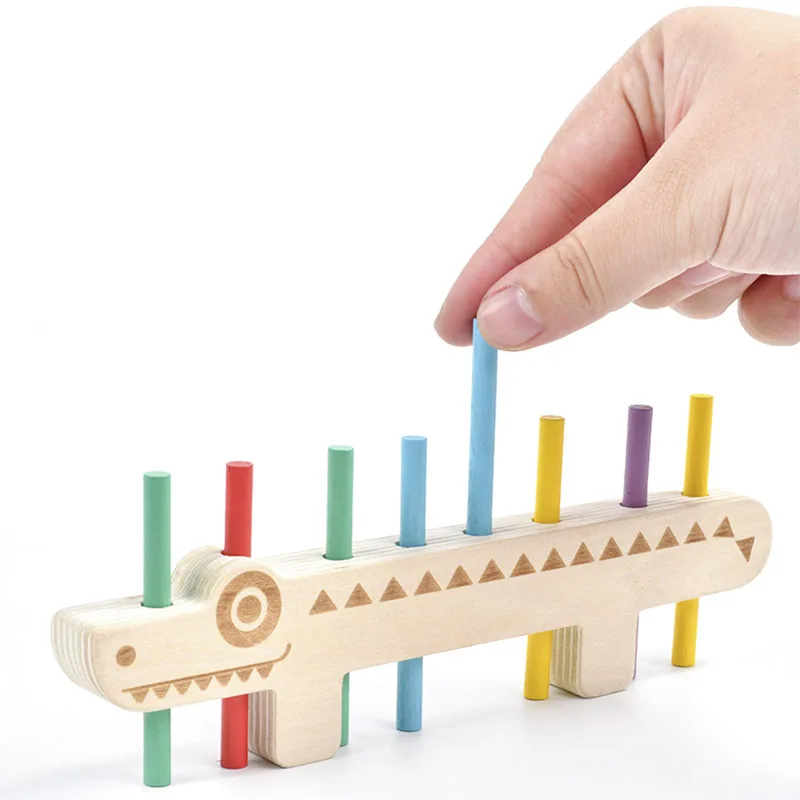
For early counting, Color Matching Peg Board aligns with activity cards.
Color Matching Peg Board | Counting Sticks & Cards

Wooden Peg Board Fine Motor Toy for preschool sorting — color and shape matching.
Wooden Peg Board Fine Motor Toy for Preschool Kids

For early counting, Magnetic Color & Number Maze aligns with color sorting.
Magnetic Color & Number Maze | Montessori Fine Motor Toy


