
What Makes Shape Copy Activities Easier to Use for Preschoolers?

An activity can look easy on the table and still feel heavy the moment copying begins. That gap matters because hesitation turns a short practice window into a guided task you keep rescuing.
Experienced screening starts earlier: not with variety, but with target visibility, setup drag, and how cleanly the routine resets. When those stay stable, shape copy activities usually feel usable instead of tiring.
On this page
Quick Win
The task feels harder than it should when the child cannot tell what to copy, where to look, or what the next move is. That uncertainty does more than slow the start; it quietly turns you back into the operator because the activity stops feeling self-running.
The experienced filter is blunt: screen for a visible target, a contained surface, and a repeatable path before you get impressed by variety. The false shortcut is choosing the format that looks more open-ended when what usually matters at the start is whether the workflow is obvious without extra rescue.
Quick scan
- Keep the target visible beside the work area.
- Use a contained setup with the core pieces already present.
- Start with a pattern path that does not need constant re-explaining.
- Prefer a format that can move into the next round without rebuilding the whole task.
Why Some Shape Copy Tasks Feel Easier
What makes shape copy activities easier to use for preschoolers is rarely mystery or talent. It is usually load. When the child has to hold too much of the design in mind or decode too many direction changes at once, hesitation shows up fast and the task starts to feel heavier than its surface simplicity suggests.
That is why experienced operators screen mechanism before novelty. Simple shapes, stable patterns, and a fixed work area lower visible decision load; a busy format that looks more stimulating can actually add confusion because it asks for more interpretation before any real copying begins.
What Lowers First-Use Friction

A format can look low-prep and still push the real work upstream. When you have to sort the pieces mentally, explain the workflow, and stabilize the surface before copying even starts, the routine begins tired and the child meets the activity after some of the patience is already gone.
That is why a contained format with the board, reference cards, and bands already included can lower first-use friction in a grounded way. The false shortcut is assuming a looser setup is easier because it looks flexible; in practice, the hidden cost is that flexibility often asks you to do the organizing work the format should have handled.
Near-Point Copying Lowers Load Better Than Memory-First Starts

The task gets harder when the target lives too far from the build surface or disappears into memory after a quick glance. Then each move becomes a small guess, and the child spends more energy recovering the target than actually copying the shape.
A near-point model lowers that drag because the comparison loop stays open while the child works. The false shortcut is treating memory pressure as a better starting route; if the goal is easier use, a visible card beside a fixed peg grid usually gives a cleaner start because the target and the work area belong to the same workflow.
How to keep the load visible
- Place the model close to the working surface.
- Keep the target readable while the child is building.
- Use a format that lets the child compare shape and placement in real time.
Which Pattern Types Are Easier to Start With
A pattern can fail long before the child rejects the activity outright. When the jump in path complexity is too sharp, each new round starts to feel like a restart instead of a continuation, and that repeated break in momentum is where patience begins to thin out.
This is why experienced screening favors shapes with clear outlines and fewer direction changes at the start. The false shortcut is choosing the more impressive pattern because it seems like better value; if the child has to re-orient from scratch each time, the routine stops feeling approachable and the format loses its easy-start advantage.
Starting fit
- Clear outlines: easier to scan; lower orientation confusion
- Stable path changes: easier to continue; lower restart drag
- Busy pattern jumps: harder to settle into; higher patience drain
Keep the step-up gradual rather than dramatic.
How to Keep the Activity Repeatable

A promising activity can quietly become something people stop taking out when reset feels like a small teardown after every use. That kind of restart friction does not always look dramatic, but it drains patience, delays the next round, and slowly turns a good idea into a routine people avoid.
Repeatability improves when the same board can carry different target cards and the whole loop stays inside one compact work zone. The false shortcut is chasing more variation without a stable return path; extra options do not help much if every new round makes you rebuild the routine from the ground up.
What keeps reuse intact
- Keep the same work zone from one round to the next.
- Use a format that can support different target cards without changing the whole workflow.
- Make reset feel like continuation, not partial teardown.
Replay value matters only if the reset path stays light.
What to Check Before You Choose a Format
Selection goes wrong when the format looks promising but the actual use case stays vague. That mismatch creates a quiet kind of doubt: the activity may still work, but you never feel sure it fits your surface, your routine, or the amount of guidance you want to keep giving.
The experienced route is to verify visible targets, included core pieces, compact tabletop fit, and clear material details before you commit. The false shortcut is assuming broad flexibility automatically means easier use; what usually decides the outcome is whether the format removes friction where the routine tends to break.
Wrap-up checks
Shape copy activities feel easier when the target stays visible, the setup stays contained, and the routine can restart without extra explanation.
- The child can read the target without long verbal setup.
- The activity can begin without extra organizing work from you.
- The next round can start with the same workflow instead of a fresh rebuild.
- Your role shifts from constant operator to light support.
Search again if target visibility, compact fit, or reset flow still looks uncertain after a direct format check.
Compare the candidate format against your real tabletop and routine, then keep only the option that still looks easy after the novelty wears off.
FAQ
The useful part for a buyer is not the term itself but the predictability it creates. Repeated shape structure makes the next move easier to anticipate, which can lower hesitation during copying.
That is why repeated forms often feel easier to scan than a pattern path that keeps changing its visual logic.
A predictable pattern reduces the amount of fresh interpretation needed from one move to the next. That matters because the activity feels lighter when the child can see how the path is behaving.
The practical advantage is workflow clarity, not a promise of a special outcome. Repetition helps the routine feel steadier and easier to continue.
The safer way to read the activity is through task format. Copying and finishing patterns ask the child to notice structure, compare what is visible, and stay with a sequence long enough to complete it.
That makes the activity useful as practice, but the article should stay grounded in how the task works rather than turning it into an unsupported promise.
That closeness matters because it lowers memory demand. The child can keep checking the target while building instead of reconstructing the design from recall.
When the target and the working surface stay visually linked, the activity often feels easier to use because the comparison loop stays open.
A compact board-based setup usually makes this easier to judge because the working area is more inspectable from the start. You can see whether the target, the build surface, and the core pieces remain in one zone.
If the setup looks like it needs spillover space or extra sorting before use, the small-table fit is less convincing even if the activity itself still looks appealing.
Recommended picks
Quick matches for this article

For small-table shape copying, this geoboard aligns with pattern cards and guided 2D play.
Wooden Geoboard Nail Board with Cards for Children
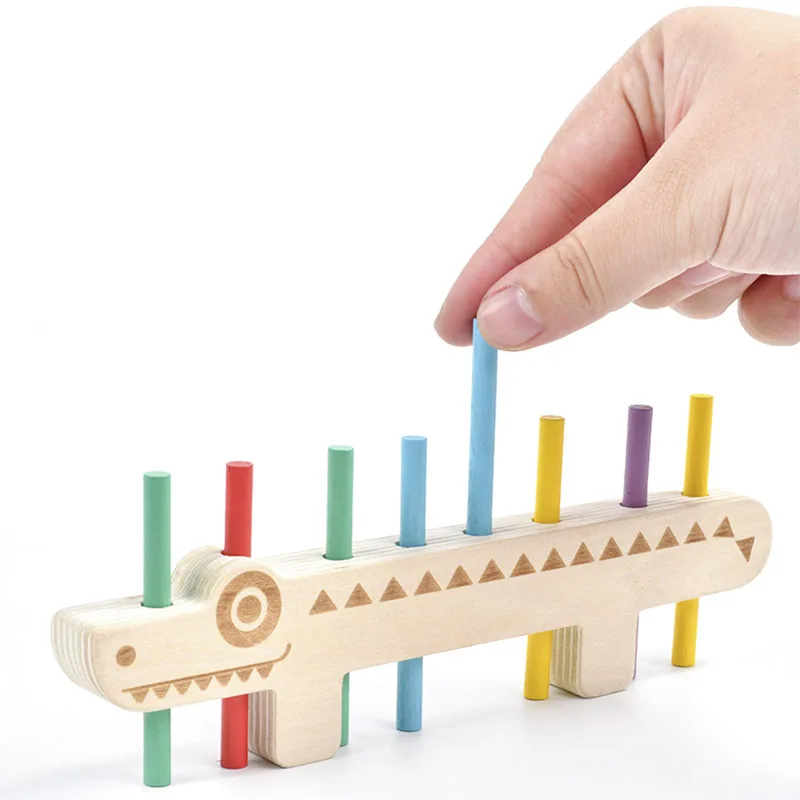
For card-led tabletop copying, this peg board aligns with pattern matching and activity cards.
Color Matching Peg Board | Counting Sticks & Cards

For repeat tabletop shape work, this tangram board aligns with geometric pieces.
Wooden Hexagonal Tangram Puzzle Board for Kids

For preschool shape matching, this peg board aligns with short screen-free play.
Wooden Peg Board Fine Motor Toy for Preschool Kids

For guided tabletop copying, this card-led set aligns with compact pose-matching play.
Stick Man Puzzle Toy Set with 24 Pose Cards


